
Should You Mix Creatine In Coffee?
The ritual of drinking coffee is often soothing, but the effects of its caffeine content provide a much-needed perk in the morning. Caffeine is a stimulant, and it's well-researched for its role in increasing alertness and improving athletic performance (more energy translates to working out harder).
Creatine is another highly researched ergogenic (aka performance-enhancing) aid. But this popular powder is no longer confined to weight rooms and shaker cups.
But what happens when you combine these two widely used products? Well, there's still some misinformation circulating that caffeine will negate any of creatine's benefits, despite no recent studies indicating that's the case.
How do these compounds work?
First, let's break down how both creatine and coffee work individually in the body.
Creatine is both a naturally occurring compound (in animal proteins as well as a compound the body can make from three amino acids: arginine, glycine, and methionine) and a supplemental ingredient.
It's stored primarily in the muscles (but also in the brain and bones) as phosphocreatine and is used to help generate energy in the form of adenosine triphosphate1 (ATP). This is especially prominent during intense workouts when the body needs energy quickly. And it's this quality that makes it such an effective ergogenic aid (and helps you build muscle, increase strength, and recover faster).*
While creatine helps the body produce energy, it is not a stimulant like caffeine. Caffeine is a stimulant because it acts directly on the central nervous system to block adenosine receptors2 in the brain, which keeps you from feeling drowsy. This, in turn, spurs the release of dopamine and norepinephrine, increasing your energy levels, mood, and focus. Research shows caffeine can improve power, strength, and stamina3 for both cardio and strength training exercises.
What the research says about taking them together
There's much more research on each of these compounds individually than together.
One of the first studies looking at their combined use was a highly flawed one published in 19854 that concluded caffeine counteracts the effects of creatine supplements (i.e., it was just a six-day study that included nine men and a high creatine dose). More recent research shows that's not the case.
A 2015 review found that there is no physiological interaction5 between creatine and caffeine (meaning they don't compete against each other for absorption or metabolism).
In addition, research suggests that taking them together may improve athletic performance (compared to taking both individually), but they may be best for cognition.
Remember, the brain holds on to some creatine stores as well and taps into them for energy. Emerging research shows creatine alone can improve cognitive performance after a rough night of sleep. A 2024 study published in Nutrients found that taking 5 grams of creatine with 400 milligrams of caffeine daily (about 32 ounces of coffee daily) was more effective than caffeine alone6 in enhancing cognitive performance.
So If you take a recommended daily dose of creatine (5 to 10 grams) and keep your coffee intake reasonable (around three to five cups a day or less), you'll likely be able to reap the benefits of both.
Pros of taking creatine with coffee
The potential health benefits of combining creatine and coffee6 include:*
Improved strength and alertness during workouts
Cellular energy support and fewer bouts of drowsiness
Muscle recovery support
But potentially the biggest benefit is that it can help you stay consistent with creatine. Creatine is a supplement that has to be taken daily to be the most effective. So if coffee is something you drink every morning without fail, it's a great vehicle for your daily dose of creatine.
The ritual of drinking coffee is often soothing, but the effects of its caffeine content provide a much-needed perk in the morning. Caffeine is a stimulant, and it's well-researched for its role in increasing alertness and improving athletic performance (more energy translates to working out harder).
Creatine is another highly researched ergogenic (aka performance-enhancing) aid. But this popular powder is no longer confined to weight rooms and shaker cups.
But what happens when you combine these two widely used products? Well, there's still some misinformation circulating that caffeine will negate any of creatine's benefits, despite no recent studies indicating that's the case.
How do these compounds work?
First, let's break down how both creatine and coffee work individually in the body.
Creatine is both a naturally occurring compound (in animal proteins as well as a compound the body can make from three amino acids: arginine, glycine, and methionine) and a supplemental ingredient.
It's stored primarily in the muscles (but also in the brain and bones) as phosphocreatine and is used to help generate energy in the form of adenosine triphosphate1 (ATP). This is especially prominent during intense workouts when the body needs energy quickly. And it's this quality that makes it such an effective ergogenic aid (and helps you build muscle, increase strength, and recover faster).*
While creatine helps the body produce energy, it is not a stimulant like caffeine. Caffeine is a stimulant because it acts directly on the central nervous system to block adenosine receptors2 in the brain, which keeps you from feeling drowsy. This, in turn, spurs the release of dopamine and norepinephrine, increasing your energy levels, mood, and focus. Research shows caffeine can improve power, strength, and stamina3 for both cardio and strength training exercises.
There's much more research on each of these compounds individually than together.
One of the first studies looking at their combined use was a highly flawed one published in 19854 that concluded caffeine counteracts the effects of creatine supplements (i.e., it was just a six-day study that included nine men and a high creatine dose). More recent research shows that's not the case.
A 2015 review found that there is no physiological interaction5 between creatine and caffeine (meaning they don't compete against each other for absorption or metabolism).
In addition, research suggests that taking them together may improve athletic performance (compared to taking both individually), but they may be best for cognition.
Remember, the brain holds on to some creatine stores as well and taps into them for energy. Emerging research shows creatine alone can improve cognitive performance after a rough night of sleep. A 2024 study published in Nutrients found that taking 5 grams of creatine with 400 milligrams of caffeine daily (about 32 ounces of coffee daily) was more effective than caffeine alone6 in enhancing cognitive performance.
So If you take a recommended daily dose of creatine (5 to 10 grams) and keep your coffee intake reasonable (around three to five cups a day or less), you'll likely be able to reap the benefits of both.*
Pros of taking creatine with coffee
The potential health benefits of combining creatine and coffee6 include:*
Improved strength and alertness during workouts
Cellular energy support and fewer bouts of drowsiness
Muscle recovery support
But potentially the biggest benefit is that it can help you stay consistent with creatine. Creatine is a supplement that has to be taken daily to be the most effective. So if coffee is something you drink every morning without fail, it's a great vehicle for your daily dose of creatine.*
What to look for in a creatine supplement
There's no shortage of creatine powders to choose from. You always want to pick one that's been third-party tested, provides 3 to 5 grams of creatine monohydrate per serving, and disperses easily in hot and cold liquids.
mindbodygreen's creatine with taurine+ with taurine (an amino acid for even more muscle and brain benefits) fits the bill. Customers (especially women) love this supplement for toning and sculpting their muscles as well as for the sense of focus it provides.*
It dissolves well and doesn't interfere with the flavor of your beloved morning cup of joe.
If You Can Complete These 4 Moves at 60, Your Body’s Fitter Than People Half Your Age
These 4 essential moves reveal whether your body’s aging well.
Metrics like BMI or weight won’t tell the full story of how your body truly functions. Instead, movement challenges show whether you’ve maintained balance, control, and strength as you age, says Amanda Dvorak, certified personal trainer at Garage Gym Reviews. That’s why we learned the top exercises you should be able to do at 60 that signal whether your body’s fitter than people half your age.
“Measures that don’t involve movement miss the critical challenge of function,” Dr. Becca Jordre, physical therapist at National Senior Games Association, says. “This is key for older adults, but I would argue it may be equally true for younger individuals as well. We can speculate what a person should be able to do based on an X-ray, manual muscle test, or some other metric, but movement challenges show what a person CAN do. We have to factor in neurological control, pain, skill, and even motivation.”
Movement challenges can be excellent indicators of fitness and independence in the long run, says Caine Wilkes, an Olympian and certified USA weightlifting coach at BarBend.
“Aside from a few competitive athletes, after 60, it’s less about how much you can lift or how fast you can run, but about how well you can move so it can carry over into having a solid quality of life and longevity in your later years,” he explains. “Movement challenges can show how well your body performs in real-life tasks as simple as getting up, staying balanced, or handling your own body weight.”
Below, the experts share four moves that show your body’s fitter than people half your age at 60.
Sit To Stand Test

“This is a test that determines how fast you can stand up and sit down five times without your hands,” Dr. Jordre notes. “Historically, it has been linked to predicting mobility disability, and falls in older adults. It relates closely to sport performance in older athletes. This test requires lower body strength, power, and dynamic balance to move quickly and the way you move tells a physical therapist a lot about where you might have challenges.”
Place a chair of standard height against a wall for support.
Begin seated tall near the edge of the chair.
Stand up completely.
Sit back down with control and without using your hands.
Do this 5 times.
Bodyweight Squat
“The [bodyweight] squat shows lower-body strength and joint range,” Amanda explains.
Stand tall with your feet shoulder-width apart on the floor.
Extend your arms ahead of you or place your hands on your hips.
Bend at the knees and hips as you lower into a squat.
Descend until your thighs are parallel to the floor.
Press through your heels to rise back up to standing.
Half-Kneel-To-Stand
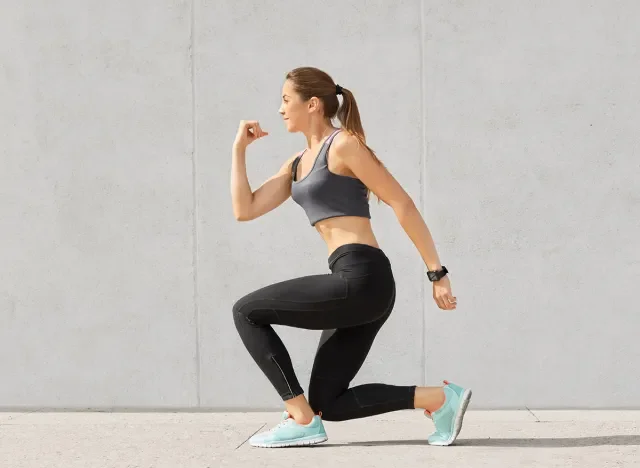
“The half-kneel-to-stand tests coordination, strength, and how easily someone can move between levels, which is a real-world skill that gets harder with age,” Amanda explains.
Begin in a half-kneeling position with one knee on the ground and the other foot planted in front.
Maintain a tall posture and engaged core.
Lean a bit forward into your front foot, pressing into that heel.
Drive through your front leg to stand up, without using your hands for support.
Use control to lower to the half-kneeling position.
Bear Crawl
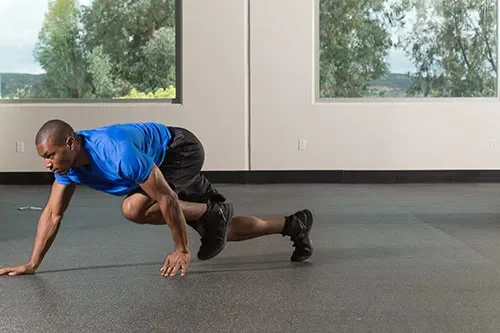
“The bear crawl performed with the body low to the ground tests coordination, shoulder stability, hip mobility, and core strength,” Caine says. “Plus, it’s a challenge.”
Begin in a quadrupod position with your knees under your hips and your hands under your shoulders.
Lift your knees a few inches off the ground.
Maintain a flat back and engage your core.
Move your left hand and right foot forward.
Then, move your right hand and left foot forward.
Continue to crawl.
Eating Disorders and Menopause: Key Insights

Recent research and reporting highlight that eating disorders are increasingly recognized among women in midlife, particularly around the time of menopause. Once thought of as conditions affecting mostly adolescents and young adults, eating disorders are now seen as a growing concern for women aged 40 and older[1].
Why Are Eating Disorders Rising in Midlife?
Hormonal Shifts: Menopause brings significant hormonal changes, especially in estrogen and progesterone, which can impact mood, appetite, and body image.
Life Transitions: This period often coincides with major life events—children leaving home, career changes, divorce, or caring for aging parents—which can be stressors or triggers.
Body Image Concerns: Societal pressure to maintain youthfulness and a certain body type persists, leading some women to develop unhealthy eating behaviors as their bodies change.
Common Eating Disorders in Menopausal Women
Binge Eating Disorder: Characterized by recurrent episodes of eating large quantities of food, often rapidly and to the point of discomfort.
Anorexia Nervosa: Restriction of food intake, sometimes accompanied by excessive exercise, even as the body naturally changes with age.
Bulimia Nervosa: Cycles of binge eating followed by purging (vomiting, laxative use, or excessive exercise).
Signs and Symptoms to Watch For
Dramatic weight changes
Preoccupation with food, dieting, or body shape
Skipping meals or avoiding social eating situations
Secretive eating habits
Emotional distress tied to eating or body image
Why Diagnosis Is Often Missed
Stereotypes: Many clinicians and even patients themselves may not associate eating disorders with older women.
Overlap with Menopausal Symptoms: Fatigue, mood swings, and changes in appetite can be mistakenly attributed solely to menopause rather than an underlying eating disorder.
Stigma: Women may feel embarrassed or believe they are “too old” to have an eating disorder, reducing the likelihood they seek help.
Importance of Awareness and Treatment
Health Risks: Untreated eating disorders can lead to serious health problems, including osteoporosis, heart disease, and worsening mental health.
Effective Treatments Exist: Therapy, nutritional counseling, and sometimes medication can be effective. Support from healthcare providers who understand the unique challenges of midlife is crucial.
Takeaway
Eating disorders are not limited to youth. Women in midlife, particularly during menopause, are at increased risk due to a combination of biological, psychological, and social factors. Greater awareness among healthcare providers and the public can lead to better diagnosis, support, and outcomes for women experiencing these challenges[1].
This summary is based on reporting from National Geographic and related health sources on the intersection of eating disorders and menopause in women[1].
⁂
1. https://www.nationalgeographic.com/health/article/eating-disorders-women-menopause